
Sliding vs Casement Windows: Which uPVC Window Is Right for Your Home?
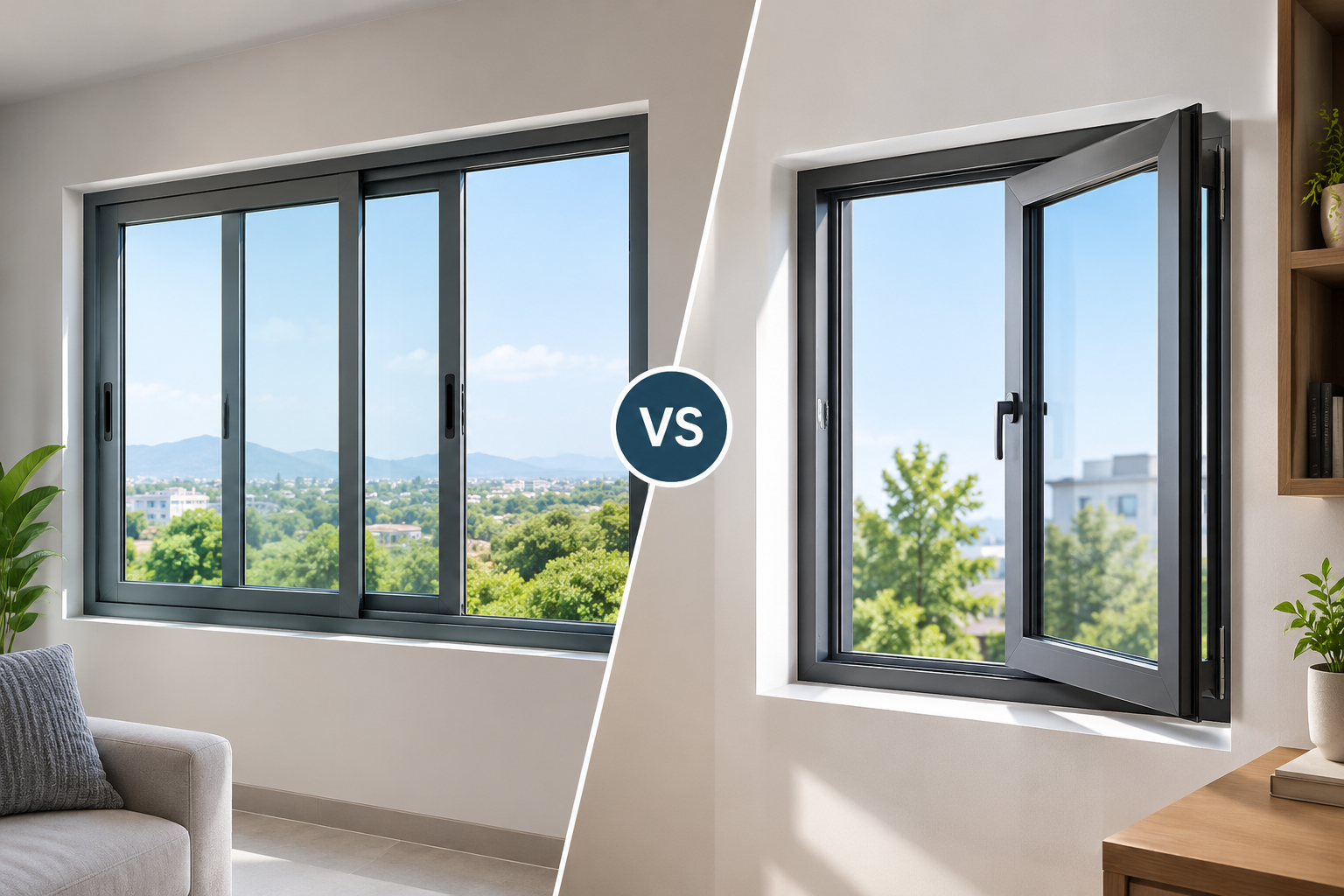
Whether you are building, renovating or replacing old frames, your window style changes how a room looks, feels and breathes.
Sliding and casement are two popular uPVC styles. They open differently and suit different spaces. This guide to sliding vs casement windows explains the differences simply, so you can choose based on your room and daily use.
What Are uPVC Sliding Windows?
A sliding window has one or more panels (called sashes) that glide sideways along a track. Nothing swings in or out.
- Opens horizontally, so no swing space is needed
- Simple to open and close
- Clean, modern look
- Often used in bedrooms, living rooms and balconies
You usually open only part of the window at a time. Mi-Fusion makes uPVC sliding windows in custom sizes.
What Are uPVC Casement Windows?
A casement window is hinged at the side, a bit like a small door. You turn the handle and the sash swings open, usually outward, though some designs open inward.
- Can open a large part of the window
- Good choice when airflow matters
- Available in classic and modern looks
- Common in bedrooms, living rooms, kitchens and study rooms
They need clear space to swing. See Mi-Fusion's uPVC casement windows.
Sliding vs Casement Windows: Key Differences
| Feature | uPVC Sliding Windows | uPVC Casement Windows |
|---|---|---|
| Opening style | Horizontal sliding | Hinged opening |
| Space requirement | No swing space needed | Needs clear space to swing |
| Ventilation | Usually opens part of the window | Can open most of the sash |
| Operation | Push sideways along a track | Turn handle, then push or pull |
| Design | Clean, horizontal lines | Classic hinged look, many layouts |
| Cleaning | Wipe glass; keep tracks clear | Wipe glass, seals and hinges |
| Best suited for | Tight spaces, balconies | Rooms where airflow matters |
| Home style | Apartments, modern homes | Independent homes, villas, classic or modern |
Which Window Offers Better Ventilation?
A casement can open more of its sash, so it often lets in more air at the same size. A slider opens only a portion of its width.
But window type is only part of the story. Airflow also depends on:
- Window size and opening area
- Room layout
- Wind direction
- Building design
A large slider can beat a small casement, and windows on opposite walls help air move through.
Which Is Better for Small Rooms?
Sliding windows help when furniture, curtains, a grill or a narrow lane sits close by, since they need no swing room.
Casements can still work in a small room, such as a compact kitchen, if there is clear space and you want a wide opening. Look at your layout first, not at what is popular.
Sliding vs Casement Windows for Different Rooms
Living Room
Think about view and light. Large glass suits both styles, so decide how much opening you want.
Bedroom
Privacy, night airflow and easy handling matter most. Sliders are simple to operate. Casements open wider.
Kitchen
Cooking needs ventilation. Check wall space near counters before choosing a swinging sash.
Balcony
Sliding configurations are often practical, since a swinging sash may block the balcony space.
Which Is Easier to Maintain?
Neither is "zero maintenance." Both need routine care:
- Sliders: keep tracks free of dust and check the rollers
- Casements: check hinges, handles and locking hardware
- Both: look at seals and wipe the frames regularly Good installation matters in any style.
Which uPVC Window Should You Choose?
Choose Sliding Windows If:
- Space for opening is limited
- You prefer horizontal operation
- You like a simple, modern look
Consider Casement Windows If:
- Ventilation is a top priority
- You prefer hinged windows
- The room has space for the sash to swing
A site visit and proper measurement can help confirm the right configuration.
Choosing uPVC Windows in Coimbatore
For uPVC windows in Coimbatore, think about local conditions:
- Sun and heat: consider glass options for bright rooms
- Rain: look for good sealing
- Dust: choose designs that are easy to wipe
- Noise: busy roads may call for double glazing
- Installation: accurate fitting is key
The Bureau of Indian Standards and the Bureau of Energy Efficiency share public information on standards and energy-efficient buildings.
Why Choose Mi-Fusion for uPVC Windows?
Mi-Fusion is a Coimbatore uPVC window and door manufacturer with over 15 years of experience. Its range includes sliding, casement, arch, combination and tilt and turn windows, along with uPVC doors and double-glazed glass options.
The team also makes uPVC villa windows and custom configurations. The process runs from consultation and site measurement to manufacturing and installation, and you can share your room size and needs before you decide.
Conclusion
No single window type suits every home. The right choice depends on layout, ventilation, space, design, daily use and upkeep.
Planning to install or replace your windows? Explore Mi-Fusion's uPVC window options and discuss your requirements with the team to find a suitable configuration for your home.
Frequently Asked Questions
Sliding windows move sideways along a track. Casement windows are hinged at the side and swing open like a door.
Often, yes, because they need no swing space. But a casement can work if there is clear room to open it.
Casements usually open wider. Still, size, layout and wind direction affect airflow, so a large slider can also work well.
Yes, both can suit local homes. Choose glass, sealing and configuration based on sun, rain, dust and noise at your site.
Both are fairly easy to care for. Sliders need clean tracks, and casements need hinge and handle checks.
Look at room size, space to open, ventilation, design and budget. A site measurement can then confirm the best fit.