
Don’t Buy uPVC Windows Before Checking These High-Quality Profile Features
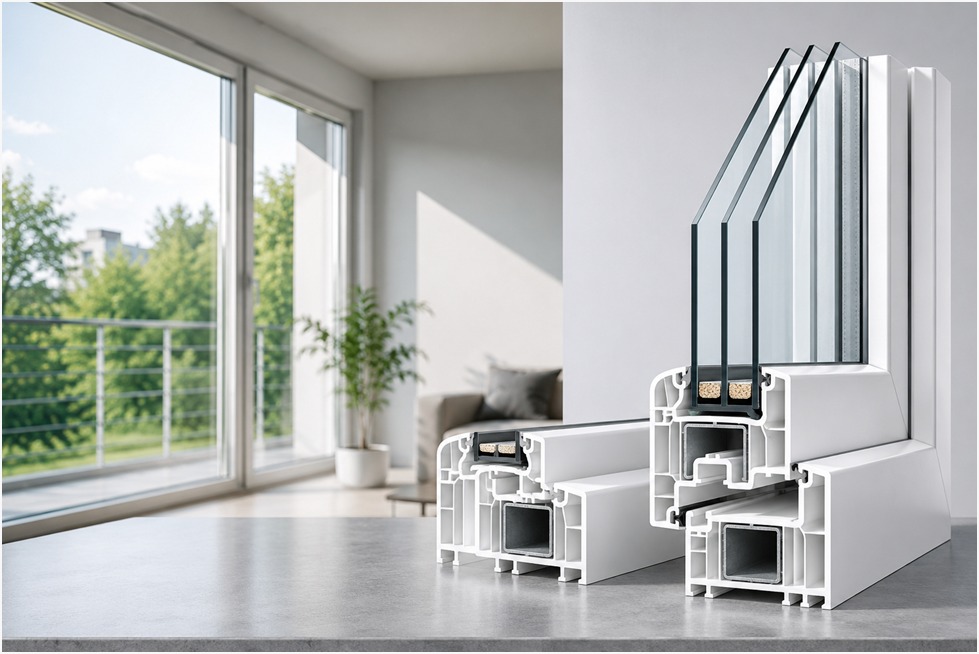
Buying new windows is a long-term decision. While homeowners often compare window styles, glass options, colours, and prices, one important component can easily be overlooked: the uPVC profile.
The profile forms the main frame of a uPVC window or door. Its design, material quality, internal chambers, reinforcement, sealing system, and manufacturing standards all influence how the finished window performs.
Two uPVC windows can look almost identical but perform very differently over the years. That is why knowing how to identify high-quality uPVC profiles before buying can help you make a more informed decision and avoid choosing a product based only on appearance or price. If you'd like to see what a well-manufactured profile looks like up close, our range of uPVC casement windows in Coimbatore is built on exactly this kind of specification.
Here are the key features worth checking before making your purchase.
1. Check the Quality and Consistency of the uPVC Material
Start with the profile itself. High-quality uPVC should have a consistent finish, smooth surface, and good dimensional stability.
Ask the supplier about the material formulation and manufacturing process. Quality profiles are designed to withstand everyday exposure to sunlight, rain, humidity, and temperature changes without becoming excessively brittle, discoloured, or distorted.
Do not judge quality purely by how glossy or attractive the profile looks. The material composition and manufacturing controls matter far more than surface appearance.
2. Look at the Number and Design of Internal Chambers
One of the most important features inside a uPVC profile is its chamber structure.
Profiles are generally manufactured with multiple internal chambers separated by walls. These chambers contribute to the frame's thermal performance, rigidity, and overall construction.
However, more chambers do not automatically mean better quality.
The chamber arrangement, wall thickness, profile geometry, and overall engineering need to work together. A properly designed multi-chamber profile can provide a useful balance of strength, insulation, and stability.
If possible, ask the manufacturer or installer to show you a cross-section of the profile rather than relying only on a specification sheet.
3. Check Steel Reinforcement Where Required
uPVC itself provides many useful properties, but larger windows and doors may require additional reinforcement to maintain structural stability.
Depending on the system and application, galvanised steel reinforcement can be incorporated into the profile. It helps the frame handle loads and maintain its shape, particularly for larger openings—a consideration that matters even more for wide spans like our uPVC sliding doors in Coimbatore.
When comparing products, ask:
- Is reinforcement used?
- Where is it positioned?
- What type and thickness of reinforcement is specified?
- Is reinforcement appropriate for the size of the window or door?
A good installation company should be able to explain these details clearly rather than simply saying that the product is “strong.”
4. Pay Attention to Sealing and Gasket Quality
A window's performance depends on more than the frame. Additionally, the sealing mechanism is crucial.
Quality gaskets help create a reliable seal between the frame, sash, and glass. Proper sealing can help reduce unwanted air infiltration and water penetration while improving comfort inside the building.
Look for properly fitted, continuous seals without visible gaps, loose sections, or poor joints.
For homes in areas exposed to heavy rain or strong seasonal weather, effective sealing becomes particularly important—especially for outward-opening styles such as our arched uPVC windows in Coimbatore.
5. Examine the Profile Wall Thickness and Build Quality
Profile wall thickness is another specification worth discussing with the supplier.
A well-engineered profile needs sufficient material in the right areas to provide stability and support the hardware and glazing system. Instead of choosing purely on a single thickness figure, consider the complete profile design.
Ask for technical specifications and compare products on a like-for-like basis.
This is particularly important when evaluating significantly different price quotes. A cheaper quote may involve differences in profile specifications, reinforcement, hardware, glass, or installation—not necessarily just a lower profit margin.
6. Check UV and Weather Resistance
Windows are exposed to outdoor conditions every day. Sunlight, heat, rain, dust, and temperature fluctuations can gradually affect inferior materials.
When selecting high-quality uPVC profiles, ask about their weathering and UV-resistance characteristics.
A reputable manufacturer should be able to provide information about the profile system's expected performance and applicable product standards.
Remember that actual performance also depends on the glass, hardware, installation quality, drainage design, and building conditions.
7. Verify the Hardware Compatibility
Even a well-made frame can underperform if unsuitable hardware is installed.
Handles, hinges, locking mechanisms, rollers, and other hardware must be compatible with the profile system and appropriate for the size and weight of the window or door.
For frequently used balcony doors, sliding doors, or large openings, hardware quality becomes especially important—which is why our uPVC slide and fold doors in Coimbatore are matched with hardware rated for daily use.
Ask the supplier which hardware brand and specification will be used, and whether replacement parts will be available in the future.
8. Don't Ignore Drainage Design
A good uPVC window system should have a properly designed drainage path.
Water can enter around the external areas of a window during heavy rain. The drainage system is designed to manage this water and direct it safely outside rather than allowing it to accumulate inside the frame.
During your inspection, ask the installer to explain how drainage works in the selected window system.
This small detail can make a significant difference to long-term window performance.
9. Installation Quality Matters as Much as the Profile
Choosing a high-quality profile is only half the job.
Even an excellent uPVC window can develop problems if it is incorrectly measured, poorly aligned, inadequately anchored, or improperly sealed during installation.
Before placing an order, check:
- How measurements will be taken
- How the frame will be fixed
- How gaps will be sealed
- How the window will be aligned
- Whether installation includes finishing and drainage checks
- What after-sales support is provided
In practical projects, installation quality is often the difference between a window performing well on paper and performing well in a real building.
10. Ask for Product Documentation Before Buying
A trustworthy supplier should be comfortable explaining what you are purchasing.
Before making a final decision, request relevant product specifications, warranty information, profile details, glass specifications, hardware details, and installation terms.
Where applicable, look for products manufactured and tested according to recognised industry standards. Avoid making a decision based solely on claims such as “premium,” “best,” or “German technology” without supporting technical information. Our uPVC windows and doors showroom in Coimbatore is a good place to review this documentation in person before you order.
A Simple Checklist for Buyers
Before purchasing uPVC windows, check these points:
- Material: Is the profile designed for long-term outdoor exposure?
- Chambers: Is the internal chamber design appropriate for the application?
- Reinforcement: Is suitable reinforcement provided where required?
- Seals: Are the gaskets properly fitted and durable?
- Hardware: Is the hardware compatible and serviceable?
- Drainage: Does the system have an effective drainage design?
- Installation: Does the installer follow proper fitting and sealing practices?
- Documentation: Are specifications and warranty terms clearly provided?
Frequently Asked Questions About High-Quality uPVC Profiles
Final Thoughts
Choosing uPVC windows should involve more than comparing prices and appearances. The profile is a fundamental part of the window system, and details such as chamber design, reinforcement, sealing, drainage, weather resistance, and hardware compatibility deserve careful attention.
Instead of asking only, “How much does the window cost?”, ask “What exactly am I getting for that price?”
Taking a little time to inspect the specifications and understand the profile system before buying can help you choose windows that are better suited to your building, climate, and long-term requirements. Ready to compare specifications in person? Get in touch with Mi-Fusion for a free consultation and quote.