
How to Customize uPVC Windows and Doors in Coimbatore?
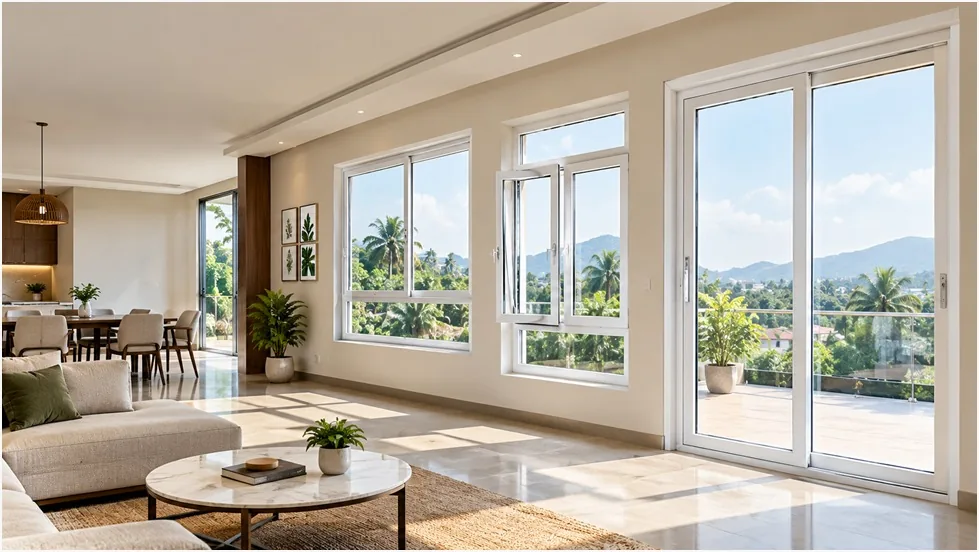
Most homeowners assume "customization" just means picking a size. In reality, a uPVC window or door can be shaped around how a room is used — its ventilation needs, natural light, privacy, and even the direction it faces. Style, glass, frame finish, hardware and opening type can all be matched to the room, rather than fitted to a standard template.
This guide walks through what can actually be customized, so you know what to discuss with a uPVC window and door company before placing an order.
What Can You Customize in uPVC Windows and Doors?
Customization usually covers five areas: the window or door style, the size and panel configuration, the glass type, the frame colour and finish, and the hardware. Each of these affects how a window performs — not just how it looks. A bedroom window, for instance, has different needs from a kitchen window or a balcony door, so the right combination depends on the room rather than a fixed design.
Choose the Right Window or Door Style
Sliding Windows
Sliding windows move horizontally along a track, so they don't need clearance space to swing open. This makes them practical for balconies, corridors, or rooms where furniture or grilles sit close by. They're also easy to operate day to day, which matters for windows opened frequently.
Casement Windows
Casement windows are hinged and open outward like a door. Because the whole sash swings open, they allow more direct airflow than a sliding window of the same size — useful in kitchens or bathrooms. They also seal tightly when shut, worth considering for rooms facing heavy rain or dust.
Combination Windows
A combination window mixes fixed and openable sections, or blends sliding and casement panels, within one frame. This suits wide openings where you want a large glass area for light but only need part of it to open — common in living rooms and large bedroom windows.
Tilt-and-Turn Windows
These offer two opening modes: tilting inward from the top for gentle ventilation, or turning fully inward like a door for cleaning or full airflow. That flexibility makes them useful for upper-floor rooms or windows otherwise hard to access from outside.
uPVC Doors
The same logic applies to doors. Sliding doors suit balconies and openings with limited floor space. Casement doors give a wider, unobstructed opening for main entries. Slide-and-fold doors work well when opening up an entire wall — common in villas connecting indoor space to a garden or terrace — but they need enough side space for the panels to stack.
Customize the Size and Configuration
Beyond the style, actual dimensions matter just as much: width and height, how many panels the window has, which sections are fixed and which open, panel arrangement, and opening direction. For larger openings, the configuration often needs to balance glass area with structural support.
None of this should be based on assumptions or standard sizes. Final dimensions should always come from an actual site measurement — even a small error here can affect how smoothly a window operates or how well it seals once installed.
Select the Right Glass
Glass selection affects light, privacy, noise and thermal comfort, so it's worth treating as its own decision. Clear glass maximizes light and suits most living areas. Toughened glass is often used where safety matters more, such as larger panes or ground-floor openings. Privacy glass suits bathrooms or windows facing neighbouring buildings. Double-glazed (DGU) glass, which uses two panes with a sealed air gap, is worth considering for rooms facing a busy road or strong afternoon sun.
Glass thickness is genuinely project-specific — it depends on panel size and wind exposure, so it's best confirmed during consultation rather than assumed in advance.
Choose Frame Colour and Finish
Frame colour is largely an aesthetic choice and can be selected to suit the home's architecture — a white frame for a contemporary villa, a woodgrain finish for a more traditional look, or darker tones for a bolder facade. There isn't one colour that inherently performs better than another; the choice should fit the design you're going for.
Customize Hardware and Security Features
Handles, hinges and locks affect daily usability as much as the window style does. A door used multiple times a day — like a main entrance or balcony slider — benefits from sturdier hardware than a window rarely opened. Multi-point locking systems, which engage at several points along the frame rather than one, are worth considering for main doors and ground-floor windows where security matters more. Hardware quality also affects how smoothly a window operates over years of use.
Consider Coimbatore's Climate and Home Design
Coimbatore's mix of strong sun, dusty streets and seasonal monsoon rain does influence what's practical. Windows facing direct afternoon sun may benefit from glass that manages heat better. Rooms near busier roads may prioritize sealing and noise-softening glass. Ground-floor or garden-facing openings need attention to rain protection at the sill and frame. Orientation and room usage should guide the configuration — a kitchen needs quicker ventilation, while a bedroom may prioritize quiet and privacy. There isn't one standard setup for every home; it depends on how each room faces the sun, street, or open space.
What Should You Check Before Ordering Customized uPVC Windows?
- Exact opening measurements, taken on-site
- Window or door type suited to the room
- Number of panels and opening configuration
- Glass requirement (clear, toughened, privacy or double-glazed)
- Frame colour and finish
- Hardware and locking system
- Mesh requirement for insects
- Ventilation requirement for the specific room
- Installation method and site conditions
- Warranty terms and after-sales support
Final Thoughts
Good customization isn't about choosing every available feature — it's about matching the window or door to what the room and property actually need. Style, size, glass, frame finish and hardware all work together, and getting the combination right depends on accurate measurement, a configuration suited to the space, quality materials, and careful installation. Discussing these details upfront makes it far easier to end up with windows that work well for your home, not just ones that look good on paper.